


From Stage to Screen, and Back Again.
- Violet Grace Fink

- Mar 28, 2025
- 6 min read

My days as a performer began early. There were regular spontaneous plays following most dinner parties my parents hosted, especially if my childhood best friend was in attendance. We would rough out the plot line beneath the table or in an adjacent room, don our capes or hats or whatever other treasures the ample costume box offered, and return to the dining room to announce that the performance would be beginning shortly, and could everyone follow us into the living room, please. The photo above was clearly from one of our better-planned shows – likely one that was assisted by my sister – because, look! We even had an 'and' card.
When I started school, I was in every production. I was a Who in Seussical and a rat in The Nutcracker. I had schemes to bring Wicked to the school's stage, too, but I was kindly told that a show of that size would be too difficult for a seven-year-old to organise. I maintain that it could have been done. When we moved to Hawaii, I was a mediator, a cockroach, a recycling-obsessed witch, an older sister to Little Red Riding Hood (called, fittingly, Medium Purple), and the ostentatious proprietor of a saloon in the Wild West. I danced in a local production of The Vagina Monologues and performed in assorted showcases for hip-hop and hula (separately, of course). Back in LA, I was the miller's daughter in Rumplestiltskin and Gerda in the Snow Queen.
And then, after a conversation with a prospective talent manager and a thorough consideration of my goals, I decided to reorient my focus. I buckled down on my studies and devoted myself to an array of extracurriculars beyond acting. Though I still recorded an episodic radio theatre podcast with my friends on the odd weekend, I had stepped back from the world of performing. I told myself that I would pursue a serious career in psychology and not chase the dream of the stage or silver screen.
Obviously, we know how that turned out. I reached the end of my degree and knew with greater certainty and clarity than ever before that I need a balance of creativity for my overall wellbeing. So, I decided to trust my instincts from childhood and launch myself fully back into the world of acting – this time with a keen focus on screen.
I took to screen acting like a duck to water. It requires a different set of skills to bring characters to life in a way that feels genuine and compelling to the audience, relying more on subtlety and personal, intimate moments, which suited me well. As I leaned back into this craft that I have always loved, I found it easier to be creative with the roles I took on, adding backstory and personal details of my own design that made them feel more alive. They say that the trick of acting well is the ability to tell a story with complete honesty and conviction. The more I fleshed out these characters, the more real and visceral their stories became to me, and the more honest I was in my performance. It was freeing, to be able to release my own fears of judgement or personal stresses and step fully into the story we were all creating together.
I worked exclusively on screen projects for two years, building connections and a diverse portfolio of short films, commercials, music videos, and documentaries. I met wonderful, passionate, brilliantly talented people who consistently reaffirmed my conviction that this bizarre life as a creative is richly rewarding for those who give themselves fully to it. Days on set added fuel to that fire, keeping me motivated and hungry for the next project I could sink my teeth into. And though my primary focus remained screen acting, I applied to be considered for various theatre projects that piqued my interest, just to keep my options open.
One in particular caught my eye last summer. It was called 'The Various Methods of Escape' and it had just completed a sold-out run of its tour in Australia. It was a cheerful play about a family whose eldest daughter, after being kidnapped and held hostage for 13 years, has just been returned home. The story picks up six months after their reunion, and highlights the way each character has dealt with or suppressed the trauma of this event. The family goes from pretending everything is absolutely fine and not discussing the loss and abrupt regain of one of their two daughters, to finally admitting that they're all suffering from the wounds left by a man who took away their child. I was gripped by the premise and applied immediately to the role of Hope, the youngest daughter.
Those of you in the industry will likely know the feeling of reading about a character and seeing yourself reflected in the words describing them. From the moment I read about the girl who took on her parents' happiness as her own responsibility and felt miserable that she could never fill the sister-shaped hole that had been left in all of their lives, I felt a kinship to Hope. Not only did I understand the childish naïveté of believing that it was possible to cancel out all the hurt by providing an abundance of joy and lightness to grieving parents, I also understood how this impossible task ages a child. Her character was so similar to my own that I was able to draw from my own experience and allow that to add greater gravity and authenticity to the scene I read for the audition. I was so excited about it I even workshopped and rehearsed with my mum for an hour to pin down the key elements of the piece and what I should highlight with my performance.
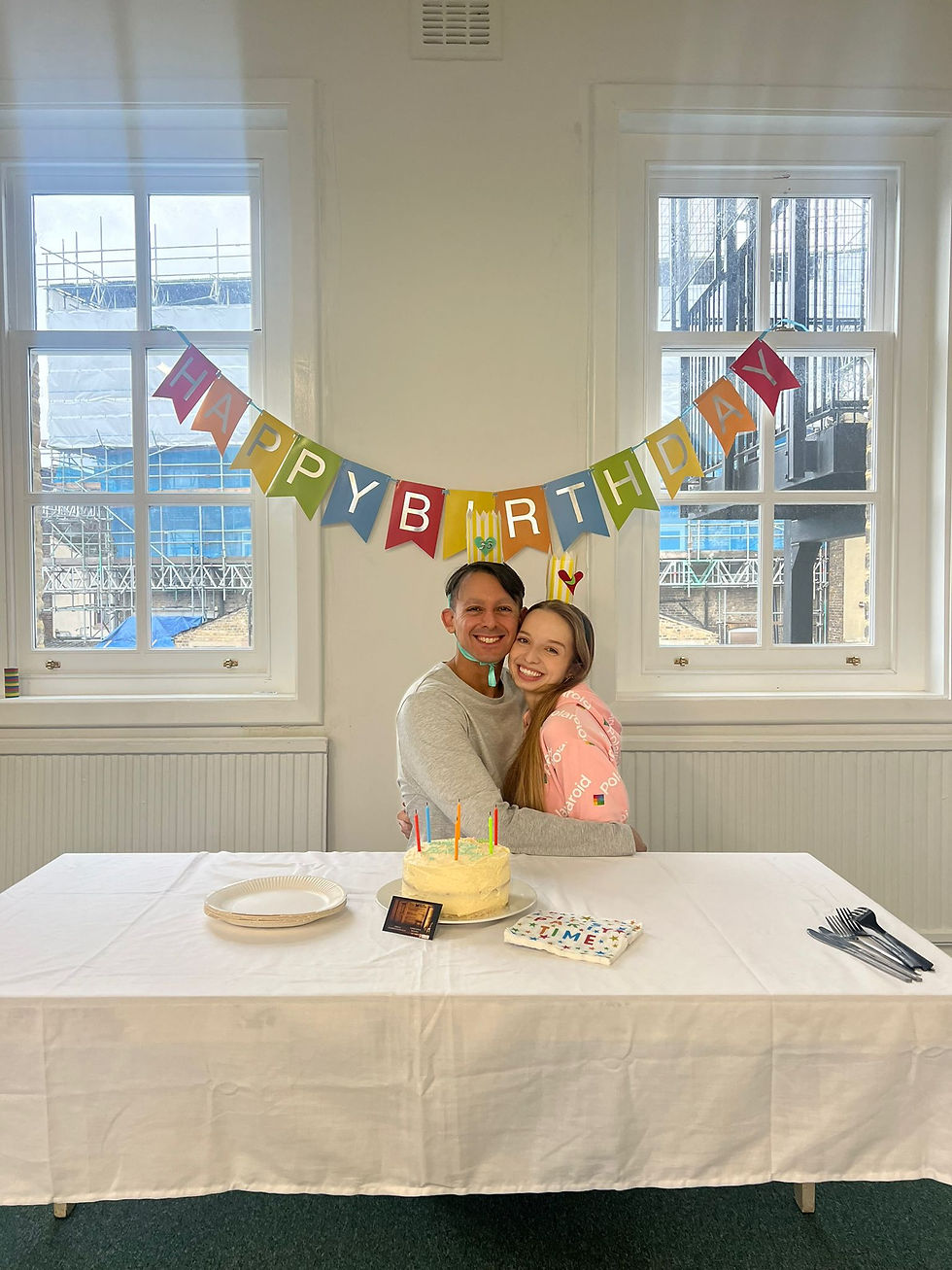
And then, blessedly, I was cast! We had our first script reading nearly three months before opening night, rehearsed once weekly via Zoom whilst the director was still in Australia, and committed to two or three rehearsals each week in the month leading up to the show. I was overjoyed to be a part of a live show again. I was working with clever, kind, and exceptionally talented people. We decompressed as best we could from the emotional weight of the show by checking in with each other, getting bites out, or passing the tissues after Act One, Scene Twelve. We baked little treats for one another throughout the many rehearsals and drank ungodly amounts of tea and coffee. We even had a little joint birthday party when it turned out that Mitch and I were only born one day (give or take a couple of years) apart.
By the time we reached opening night, we felt settled in the story. Our lines came to our tongues unbidden, rolling easily from them before we'd consciously remembered what we were meant to say next. Our actions were fluid and natural, moving us effortlessly from one place to the next. We had embodied our characters fully – flaws, quirks, and all. We held hands backstage as we watched the houselights dim and heard the opening track of a series of locks being opened. I remembered, perhaps too late, how much I loved the anticipation of stepping out onto the stage. Though nine years had passed between my last play and this one, the eagerness to perform, to show the audiences who assembled each night the work that we had poured our time, energy, sweat, and tears into, has never faded.
This stage family was such a gift. We showed up to do our jobs and managed to have the best time doing it. Everyone was incredibly dedicated to bringing the show to life in a way that would impact the audience as much as it had impacted each of us. We trusted each other completely, knowing that if there was a line flubbed or a part skipped that we would be able to pick up the loose thread and carry on.
That's the beauty of theatre: every show is a little different from the last, even though you're telling the same story. There are always new things to respond to, new ways to ignite the passion that carries your character through the scene, new inflections to weight your words with. Theatre is a thing that is very much alive. It changes and shifts and grows and develops within the hands of the people who are moulding it. And though I love the screen, theatre will always hold a piece of my heart.


Comments